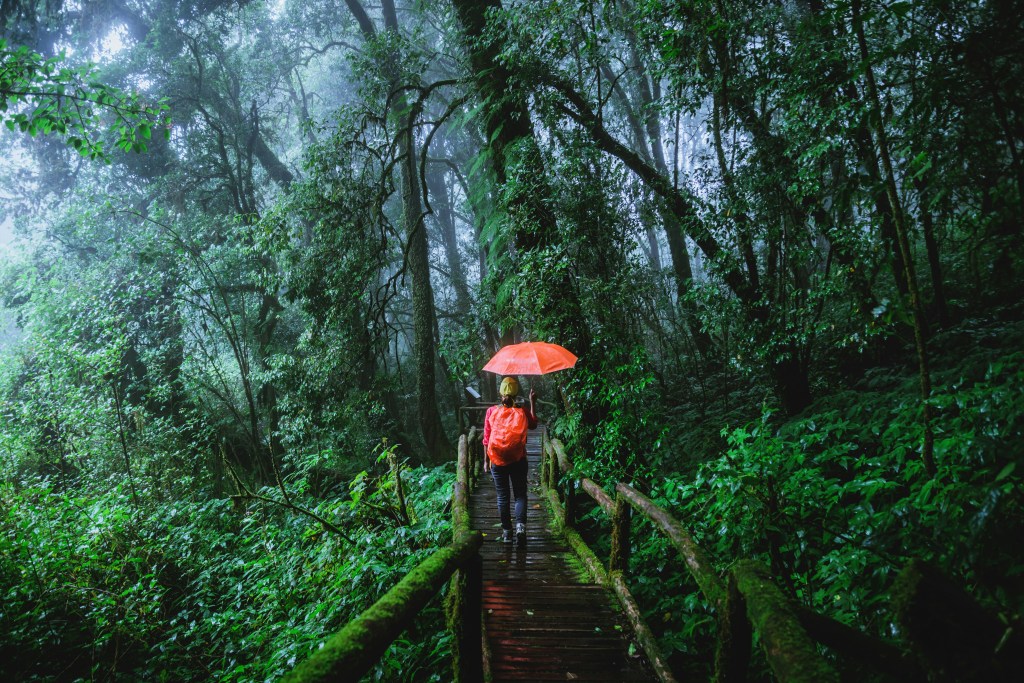
“Look at the rain long enough, with no thoughts in your head, and you gradually feel your body falling loose, shaking free of the world of reality. Rain has the power to hypnotize.”
― Haruki Murakami, South of the Border, West of the Sun
In Canada they say always carry a snow shovel in the boot of your car. In the UK we carry a rainmac and wellington boots in there.
The mere mention of rain often brings heavy sighs and moans knowing events might be cancelled or trainlines with damp leaves will stop travel etc. However, rain is actually good for our health. Do you know why?
I have always known that rain contains negative ions, but what exactly is so good about them and what do they do for us? Negative ions are odorless, tasteless, and invisible molecules present in wet environments that we breathe in. These molecules have extra electrons (questions after class, please…) which gives the ions a negative charge. Once we inhale these molecules, they travel into our bloodstream and produce serotonin, also known as the “happy hormone.”
You might be reading this and thinking, “Nope, I hate the rain!” You wouldn’t be alone with this thought. But then, why do so many of us love listening to the rain, burying our face in our washing that has been rained on accidentally, and why do we love thunderstorms so much? There’s something pulling us into the rainy weather despite our protestations!
Think of our childhood. No, not all the fighting and the crying, swipe past that! Think of the rainy days out. Not only did we cackle with pure joy leaping into puddles, nor care how soaked we got with our little wellies on. As adults when we’re caught in the rain, what do we ultimately end up doing? Laughing! While rain slops down into our eyeballs and our shoes squelch with every step, we’re annoyed that we have the wrong clothing on to protect us, or that our hair dye will be running down our dress, but, we all end up laughing.
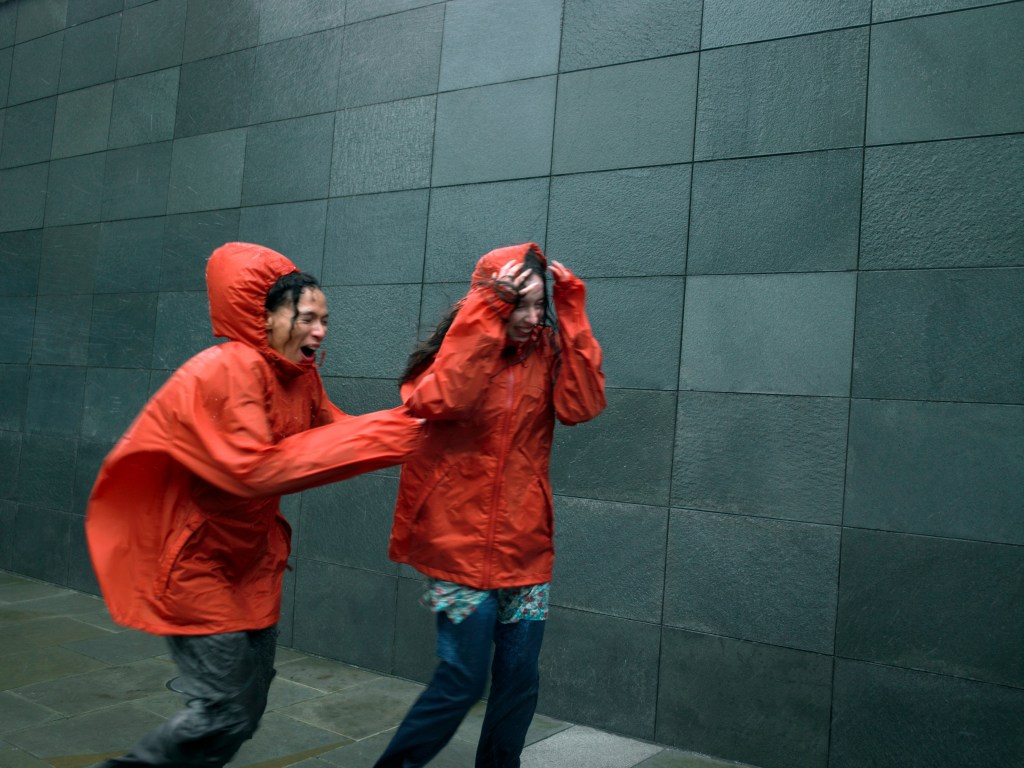
I went to a friend’s wedding, which was due to take place in a huge marquee on a beautiful summer’s day. 30 minutes before the ceremony, the sky suddenly cracked like a whip with monsoon rain hammering the canvas roof and bolt lightning. Water trickled into the marquee onto us and the lawn outside turned into a wetland. Staff gazelle-leapt, scrambling to move everything back into the stately home and we all, in feathers, heels (that’s just the men…) and top hats grabbed tables, chairs and flower arrangements and ran through the downpour to help. As our friends finally wed in the new room, we all looked like drowned cats with more mascara smudges and unruly hair than Alice cooper, plopping puddles all over the carpet and struggling to keep a straight face! It was the best wedding I’ve ever been to!
So, despite the last-minute room change, the storm invigorated us with plenty of serotonin! Here are 8 facts taken from “Super Natured” on how beneficial rain can be for our health. https://www.supernatured.org.uk/ideas–news/a-little-bit-of-rain-might-be-good-for-you
Another fascinating source about the benefits, as well as the history of rain is a wonderful book by Cynthia Barnett called “Rain: A natural and cultural history”. A wonderful read on not just the science of rain but also explores its relationship with religion, different cultures and art. https://www.bookbrowse.com/excerpts/index.cfm/book_number/3217/rain
The history of rain is fascinating and dates back centuries. Many ancient cultures had mythological ties to rain gods. For instance, the Aztecs believed that the god Tlaloc controlled rain, and they held “rain festivals” for the growth of crops. Likewise, the ancient Mayans had “rain-makers,” who were priests believed to have knowledge of the rain god Chaac. They held special festivals and prayers to bring on rain. Additionally, the Aborigines of Australia made rain sticks from bamboo or grasses filled with beans or gravel, which were elaborately decorated. They believed that shaking these rain sticks would bring on downpours, which was and still is crucial to their existence in the arid, hot climate.
There are also rain festivals all over the world such as the Teej festival in India and the Songkran in Thailand. Both involving great feasts and music to celebrate the rain feeding their crops and looking after their land.
Let’s not forget the negative impact of rain. Rain can be extremely destructive, causing floods, destroying homes, and ruining fields. In addition to rain gods believed to bring rain, there were also gods believed to stop rain. For example, the Greek god Zeus was believed to control the skies, including rain, clouds, and thunderstorms, as well as another Greek god, Helios, who was the god of the sun. In Chinese mythology, a dragon called Yinglong was believed to create rivers by swiping its tail on the land when heavy rain was expected.
Rain can also exacerbate depression and negativity in some individuals due to the lack of sunlight and its decrease in vitamin D levels. As a result, some people prefer to stay inside, feel tired and lack energy. The dark skies can then lead to the production of melatonin in the body, preparing it for sleep. Seasonal Affective Disorder (SAD), which is associated with depression, can be worsened on dark, rainy days, leading to symptoms, again, such as tiredness, lack of focus, anxiety, and decreased energy.
So, rain isn’t just a vengeful demon ruining our social events or flooding our villages. It can actually be the free therapy we need to improve our mood. Let’s remember how wonderful it feels when we do get caught in the rain and then come home to have a hot, steaming shower afterwards with a big fluffy towel!
A final fact to consider is the sound of rain. We might all eyeroll endlessly at the weather reports but why do most of us love to listen to it, watching from the window or falling asleep to it? According to scientists, rain is considered “Pink noise” which is a consistent soothing sound in the background like ambient music or ASMR (Autonomous Sensory Meridian Response) – sounds which can give us goosebumps and can make us feel happy, safe, nostalgic etc. Pink noise has lower sound waves than white noise – like the static noise from our vintage radios and TVs when we tried to tune into a channel. This is why some of us find rain so soothing at night in the dark as well as gentle wind or waves.
So, next time you see the wet stuff start to fall, try to get out and inhale, get wet, walk and run in it because the health benefits of nature are so powerful for us.


Leave a Reply